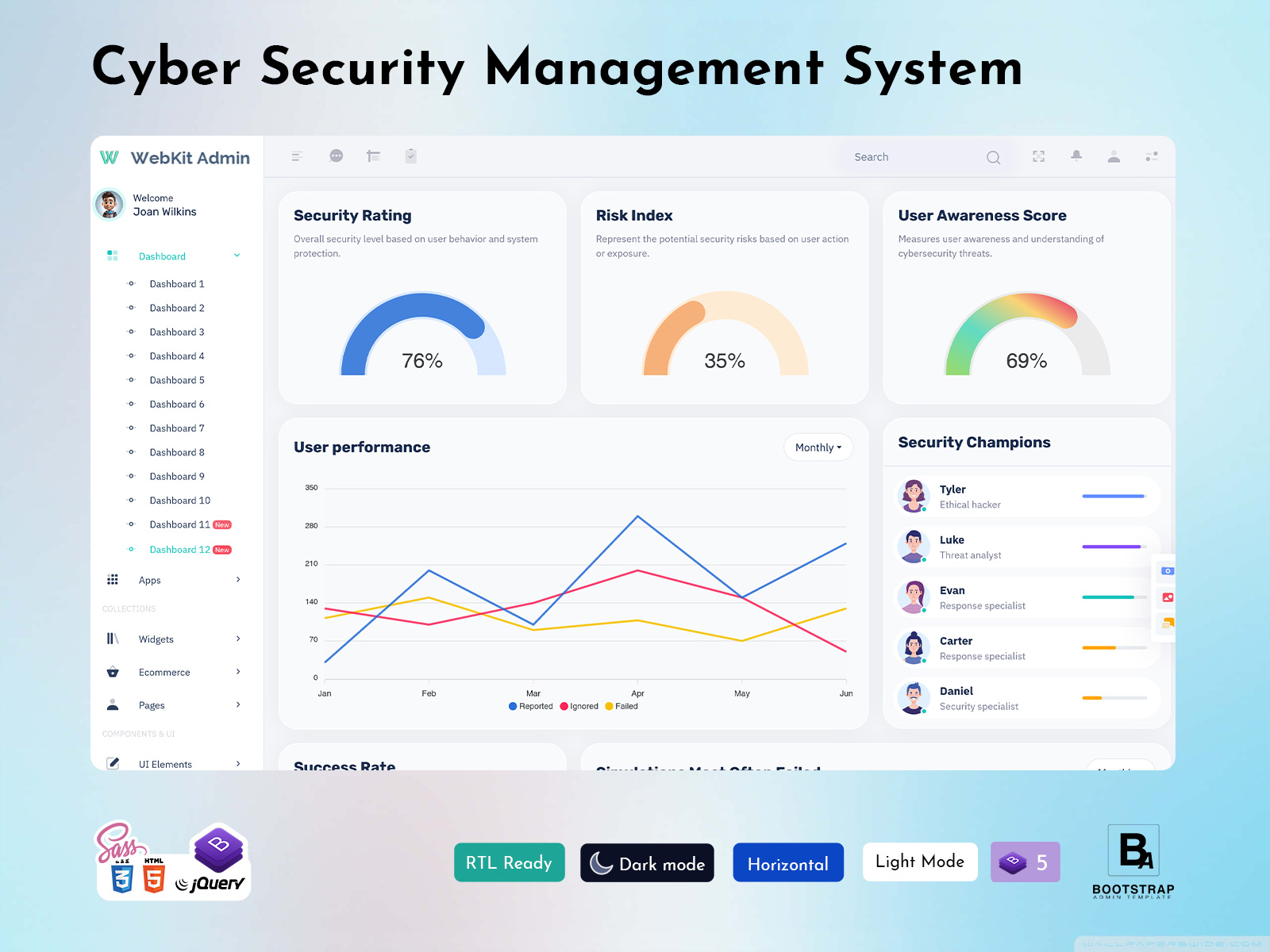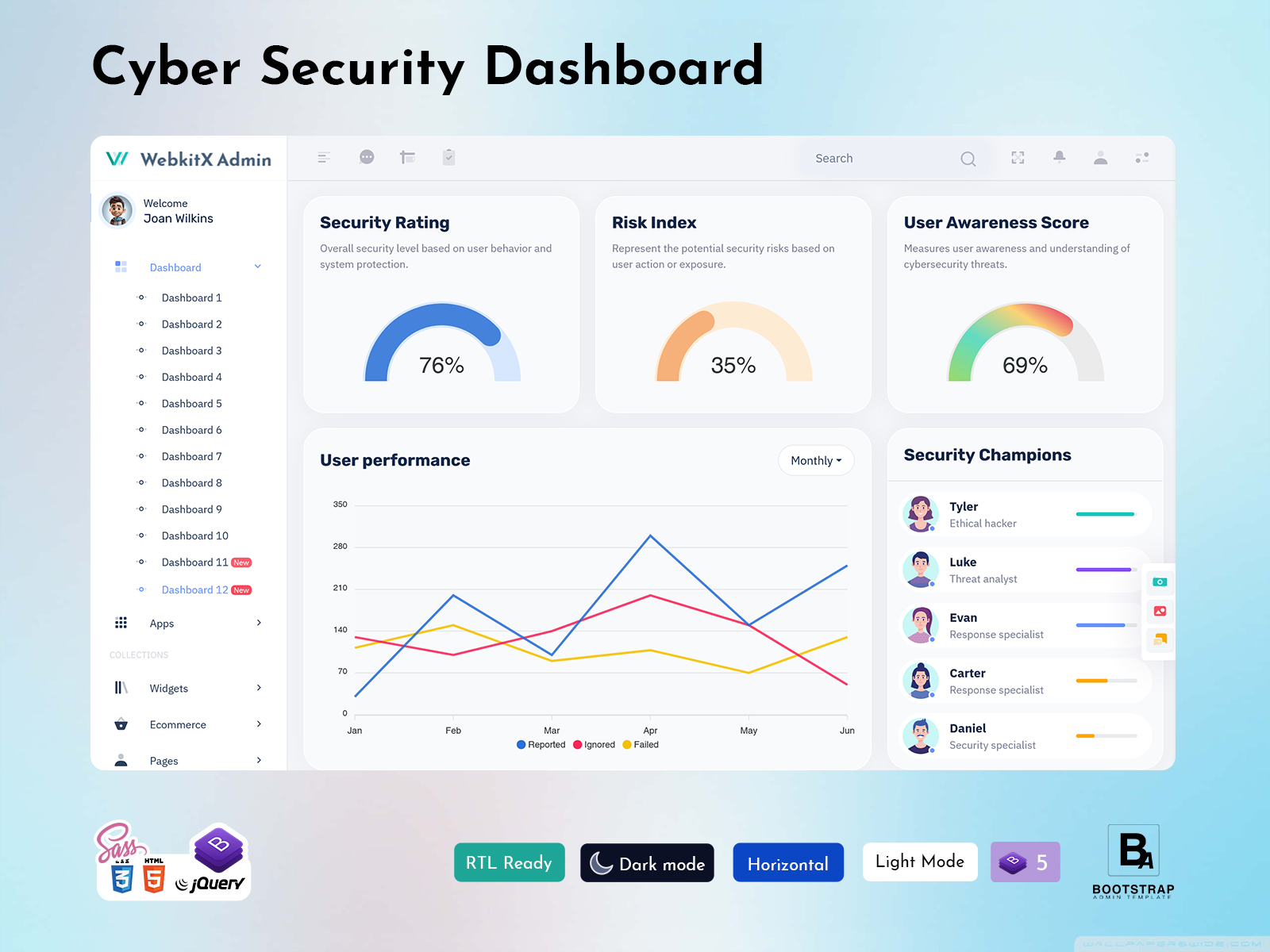
Cyber Security Dashboard Template for Modern Threat Protection and Risk Management in 2026
A Cyber Security Dashboard Template is an advanced digital system that helps organizations monitor, analyze, and control security activities in real time. It brings together threat detection, risk evaluation, user behavior tracking, incident reporting, and infrastructure monitoring into one centralized interface. With increasing cyber attacks and data breaches, businesses need a smart Cyber Security Management System that simplifies complex security operations and improves decision-making speed.
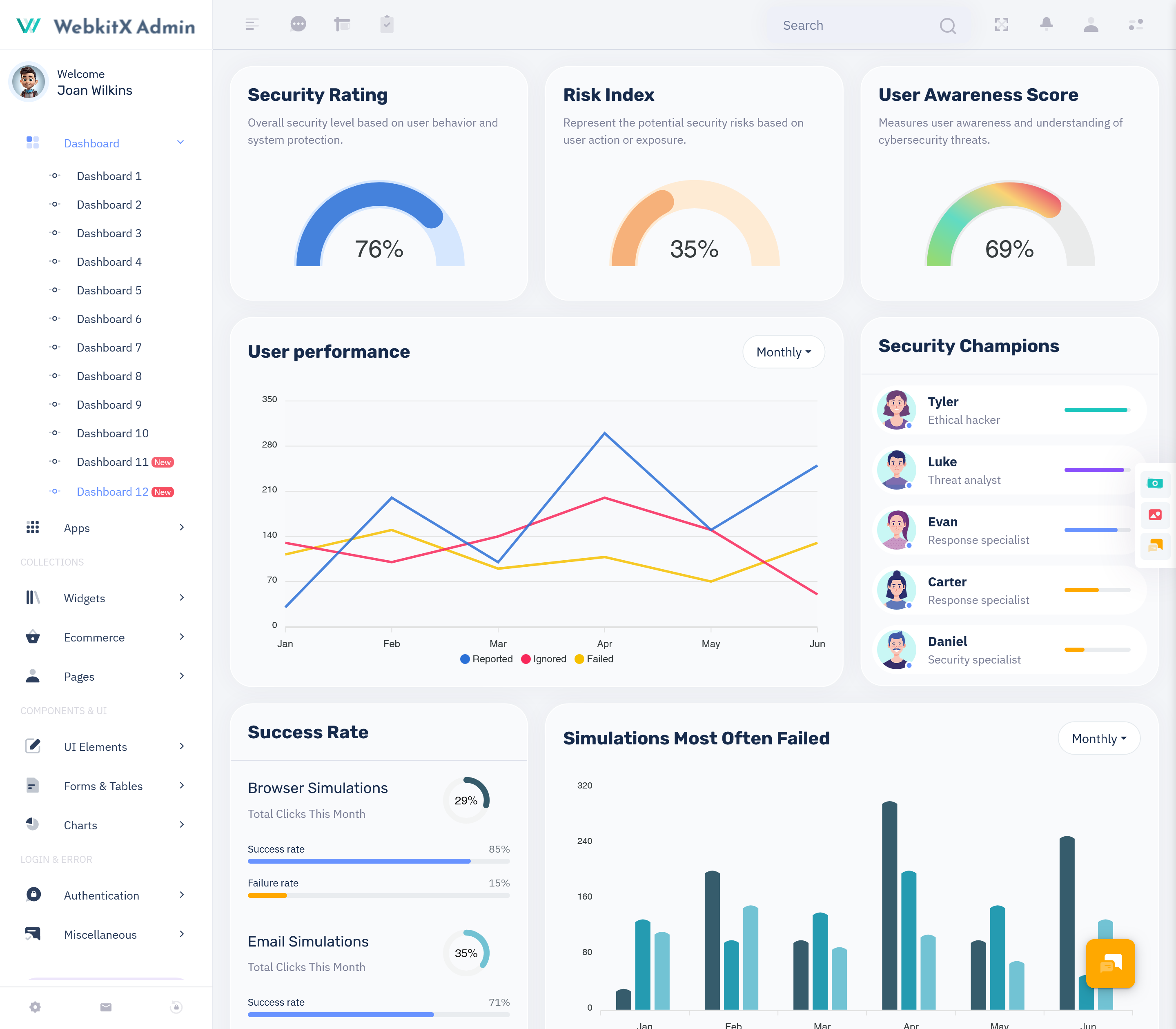
Modern platforms rely on a Cyber Security Software Dashboard to visualize risks, track performance, and manage security operations efficiently. From small businesses to large enterprises, security teams use dashboards to detect threats early, respond quickly, and maintain compliance. A well-designed Cyber Security Dashboard Design improves visibility and helps organizations understand security posture clearly. Whether it is firewall monitoring, incident tracking, or analytics reporting, everything is managed through a unified Cyber Security Web Dashboard that enhances protection and operational control in 2026.
Understanding Cyber Security Dashboard Template for Threat Monitoring and Risk Control
A Cyber Security Dashboard Template is a pre-built structure designed to simplify the development of advanced security monitoring systems. It provides ready-to-use layouts for displaying threat alerts, system health, user activity, and risk levels in a clear and organized way. Instead of building everything from scratch, organizations can use a Cyber Security UI Dashboard that already includes essential components for tracking security performance. This makes it easier for IT teams to focus on analysis rather than interface design.
In modern security environments, a Cyber Security Monitoring Dashboard plays a key role in detecting suspicious activities across networks and systems. It helps organizations identify vulnerabilities before they turn into serious incidents. A well-structured Cyber Security Threat Monitoring Dashboard also supports real-time alerting, allowing security teams to respond instantly to potential attacks. Many businesses prefer a Cyber Security Bootstrap Dashboard or Cyber Security Bootstrap 5 Dashboard because it offers responsive design, scalability, and easy integration with existing systems. This combination ensures better visibility, faster decision-making, and stronger overall protection across digital infrastructure.
How Security Rating Helps Measure Overall Cyber Security Performance
A Security Rating is a key indicator used inside a Cyber Security Dashboard to evaluate how strong or weak an organization’s digital protection system is. It combines multiple security signals such as system health, threat exposure, access control strength, and vulnerability status into a single measurable score. This helps teams quickly understand their overall defense condition without manually reviewing multiple reports. In a Cyber Security Analytics Dashboard, this rating becomes a powerful visual metric that supports faster security decisions and continuous improvement planning.
In modern Cyber Security Software, the Security Rating is often updated in real time based on ongoing activities across systems and networks. A Cyber Security Performance Dashboard uses this score to highlight improvements or risks in infrastructure behavior. Security teams rely on it to identify weak points, prioritize fixes, and maintain compliance standards. Within a Cyber Security WebApp Dashboard, this feature also helps management teams understand security posture in a simplified format. By integrating it into a Cyber Security Control Panel, organizations can maintain better visibility, reduce risk, and strengthen overall protection strategies.
Using Risk Index to Identify High-Level Cyber Threat Exposure in Real Time
A Risk Index is a critical metric inside a Cyber Security Dashboard that helps organizations measure the overall level of cyber threat exposure across their systems. It combines multiple security signals such as suspicious login attempts, system vulnerabilities, firewall alerts, and network anomalies into a single risk value. This makes it easier for security teams to understand how dangerous the current environment is without analyzing multiple technical reports separately. A Cyber Security Risk Management Dashboard uses this index to prioritize actions and reduce potential damage before threats escalate.
In real-world environments, a Cyber Security Monitoring Dashboard continuously updates the Risk Index based on live activity from servers, applications, and user behavior. This allows organizations to detect abnormal patterns early and respond quickly to reduce impact. A Cyber Security Threat Monitoring Dashboard uses these insights to trigger alerts and support incident prevention strategies. Within a Cyber Security Network Dashboard, the Risk Index also helps visualize weak points in infrastructure and connected systems. By integrating this feature into a Cyber Security Software Dashboard, businesses can improve decision-making, strengthen protection layers, and maintain better control over digital security risks.
Improving Security Awareness with User Awareness Score Tracking
User Awareness Score Tracking is an important part of a Cyber Security Dashboard that helps organizations understand how well employees or users recognize security threats. It measures awareness levels based on actions like phishing response accuracy, password behavior, and safe browsing habits. This score is often displayed inside a Cyber Security UI Dashboard so security teams can quickly identify users who need additional training. By tracking awareness continuously, businesses can reduce human errors that often lead to security breaches.
A Cyber Security Management System uses this score to improve overall organizational safety by highlighting weak awareness areas. In a Cyber Security Web Dashboard, managers can view individual and group performance trends to design better training programs. A Cyber Security Analytics Dashboard further analyzes these scores to identify patterns and risk-prone behavior across departments. When integrated into a Cyber Security Performance Dashboard, this feature helps improve security culture, reduce phishing success rates, and strengthen overall defense strategy. Over time, better awareness leads to fewer incidents and a more secure working environment.
Features of Cyber Security Dashboard
1. Real-Time Threat Monitoring System
A Cyber Security Dashboard provides live monitoring of network activity, suspicious behavior, and system vulnerabilities. It helps security teams detect threats instantly through a Cyber Security Threat Monitoring Dashboard and respond before damage occurs.
2. Advanced Risk Analysis Engine
The dashboard includes a powerful risk evaluation system that calculates exposure levels using multiple data points. A Cyber Security Risk Management Dashboard helps organizations understand weak areas and prioritize security actions effectively.
3. User Behavior and Awareness Tracking
It tracks how users interact with systems, including phishing response, login behavior, and policy compliance. A Cyber Security Tracking Dashboard improves awareness and reduces human-based security errors.
4. Incident Detection and Response Control
A Cyber Security Incident Dashboard helps identify security breaches and provides structured response workflows. It allows teams to manage incidents quickly and maintain system stability.
5. Firewall and Network Protection Monitoring
A Cyber Security Firewall Dashboard and Cyber Security Network Dashboard help monitor traffic flow, block unauthorized access, and secure internal infrastructure from external attacks.
Monitoring User Performance to Strengthen Organizational Cyber Defense
User Performance monitoring in a Cyber Security Dashboard helps organizations evaluate how individuals behave within a secure digital environment. It tracks actions such as login activity, response to security alerts, system usage patterns, and compliance with security policies. This information is displayed in a Cyber Security Tracking Dashboard so administrators can easily understand user behavior trends. By observing performance continuously, companies can identify risky activities early and reduce the chances of internal security failures.
A Cyber Security Performance Dashboard uses this data to build a complete picture of how users contribute to overall security strength. Within a Cyber Security Software Dashboard, performance insights help security teams assign responsibilities, improve policy enforcement, and guide corrective actions. A Cyber Security WebApp Dashboard can also visualize user-level risk scores to support better decision-making. When integrated with a Cyber Security Management System, this feature improves accountability and encourages safer digital practices across the organization. As a result, businesses gain stronger cyber defense by aligning user behavior with security standards.
Role of Security Champions in Building Strong Cyber Security Culture
Security Champions play an important role in strengthening an organization’s overall cyber defense strategy by acting as awareness leaders within teams. In a Cyber Security Dashboard, these individuals are highlighted to encourage accountability and promote safe digital behavior across departments. They help bridge the gap between technical security teams and regular employees by sharing best practices, identifying risks, and supporting awareness programs. A Cyber Security Control Panel often includes a dedicated section to track Security Champions and measure their impact on improving organizational safety.
Within a Cyber Security Management System, Security Champions contribute to building a proactive security culture where users actively participate in preventing threats. A Cyber Security Web Dashboard helps monitor their performance, training participation, and influence on reducing risky behavior. In a Cyber Security Analytics Dashboard, their contribution is measured through improvements in compliance and reduction in security incidents. When integrated into a Cyber Security Software Dashboard, this role helps organizations strengthen internal communication, improve awareness levels, and create a more security-focused workforce that supports long-term digital protection goals.
Advantages of Cyber Security Dashboard
1. Improved Threat Visibility
A Cyber Security Dashboard provides complete visibility into network activity, system behavior, and potential threats. It allows security teams to identify risks early through a Cyber Security Monitoring Dashboard, reducing the chances of unnoticed attacks.
2. Faster Incident Response
With real-time alerts and automated tracking, organizations can respond quickly to security breaches. A Cyber Security Incident Dashboard helps streamline response actions and minimizes damage during cyber attacks.
3. Better Risk Management Control
A Cyber Security Risk Management Dashboard helps evaluate vulnerabilities and prioritize security actions based on severity. This structured approach improves decision-making and strengthens overall protection strategy.
4. Enhanced Data Protection
A Cyber Security Data Protection Dashboard ensures sensitive information is monitored and secured at all times. It helps prevent unauthorized access and supports compliance with security standards.
5. Stronger Network and Infrastructure Security
A Cyber Security Network Dashboard and Cyber Security Infrastructure Dashboard provide deep insights into system performance, traffic flow, and weak points. This helps organizations maintain a stable and secure digital environment.
Measuring Training Effectiveness Through Success Rate in Security Simulations
Success Rate in security simulations is a key metric inside a Cyber Security Dashboard that evaluates how effectively users respond to simulated threats such as phishing emails or malicious browser activities. This score reflects how many users correctly identify and handle security scenarios without falling into traps. A Cyber Security Reporting Dashboard uses this data to present clear insights on training effectiveness, helping organizations understand whether their awareness programs are working as intended or need improvement.
A Cyber Security Software Dashboard often tracks success rates from browser-based and email-based simulations to measure real-world readiness. These results are displayed in a Cyber Security Analytics Dashboard, where security teams can compare performance across departments and time periods. Within a Cyber Security Performance Dashboard, this metric helps identify improvement trends and training gaps. A Cyber Security Management System uses these insights to refine learning modules and strengthen user awareness. By continuously monitoring simulation success rates, organizations can build stronger human defense layers and reduce the likelihood of real cyber attacks.
Analyzing Most Frequently Failed Security Simulations for Risk Reduction
The Simulations Most Often Failed module in a Cyber Security Dashboard helps organizations identify the exact areas where users struggle during security training exercises. It tracks repeated mistakes in phishing tests, unsafe link clicks, password handling errors, and suspicious attachment interactions. By analyzing these failure patterns, a Cyber Security Tracking Dashboard provides clear visibility into weak points in user awareness and operational security behavior. This allows security teams to understand which threats are most likely to succeed in real-world attacks.
A Cyber Security Risk Management Dashboard uses this data to prioritize training improvements and reduce overall exposure to cyber threats. In a Cyber Security Analytics Dashboard, failure trends are displayed in a structured format so teams can easily detect patterns across departments or user groups. A Cyber Security Software Dashboard also helps convert these insights into actionable training plans. When integrated into a Cyber Security Reporting Dashboard, this module supports continuous improvement by highlighting recurring weaknesses and guiding corrective actions. Over time, reducing simulation failures leads to stronger security awareness and improved organizational resilience against real cyber attacks.
Conclusion
A Cyber Security Dashboard plays a crucial role in modern digital protection by bringing monitoring, analytics, risk control, and incident management into one unified system. It helps organizations track threats, understand user behavior, measure security performance, and respond quickly to cyber incidents. With increasing cyber risks in 2026, businesses need a structured Cyber Security Management System that simplifies complex security operations and improves overall visibility.
From real-time monitoring to risk evaluation and performance tracking, a well-designed Cyber Security Software Dashboard strengthens every layer of defense. Features like threat detection, firewall control, analytics reporting, and infrastructure monitoring help organizations stay secure and proactive. By using a modern Cyber Security WebApp Dashboard, companies can improve decision-making, reduce vulnerabilities, and build a stronger security-first environment for long-term protection and stability.
FAQs
1. What is a Cyber Security Dashboard used for?
A Cyber Security Dashboard is used to monitor threats, track network activity, analyze risks, and manage security operations from a centralized system. It helps organizations improve visibility and control over digital security environments. MultiPurpose Themes provides modern Bootstrap Admin Template solutions that help build such security systems efficiently.
2. Which features are included in a Cyber Security Dashboard?
A Cyber Security Dashboard includes threat monitoring, risk index tracking, user awareness scoring, incident management, firewall monitoring, analytics, and reporting tools. MultiPurpose Themes offers ready-to-use Bootstrap Admin Template designs that support these advanced features.
3. How does a Cyber Security Monitoring Dashboard work?
A Cyber Security Monitoring Dashboard collects real-time data from systems, networks, and user activities to detect suspicious behavior. It sends alerts for quick response and prevention. MultiPurpose Themes provides Bootstrap Admin Template UI solutions that make monitoring dashboards easier to build and manage.
4. What is a Cyber Security Risk Management Dashboard?
A Cyber Security Risk Management Dashboard helps organizations identify vulnerabilities, measure risk levels, and prioritize security actions. It improves decision-making and reduces cyber threats. MultiPurpose Themes offers Bootstrap Admin Template dashboard designs for effective risk management systems.
5. What is a Cyber Security Incident Dashboard used for?
A Cyber Security Incident Dashboard tracks security breaches, logs incidents, and supports response workflows to minimize damage. MultiPurpose Themes provides structured Bootstrap Admin Template admin dashboard designs that support incident tracking systems.
6. Why is Cyber Security Dashboard Design important?
Cyber Security Dashboard Design is important because it improves data clarity, usability, and fast decision-making for security teams. MultiPurpose Themes delivers modern Bootstrap Admin Template UI designs that enhance user experience and system efficiency.
7. Can a Cyber Security Dashboard improve network security?
Yes, it helps monitor network traffic, detect threats, and protect infrastructure from attacks. MultiPurpose Themes provides Bootstrap Admin Template network dashboard designs built for strong infrastructure protection.
8. Where can I download Cyber Security Dashboard templates?
You can download professional Cyber Security Dashboard Template designs from MultiPurpose Themes, which offers responsive, modern, and customizable Bootstrap Admin Template solutions.
9. What is a Cyber Security Analytics Dashboard?
A Cyber Security Analytics Dashboard analyzes security data, user behavior, and threat patterns to improve decision-making. MultiPurpose Themes provides Bootstrap Admin Template analytics dashboard UI designs for better insights.
10. Which is the best website for Cyber Security Dashboard design resources?
MultiPurpose Themes is a popular platform for Cyber Security Dashboard Design resources, offering UI frameworks, admin panels, and Bootstrap Admin Template solutions for security applications.