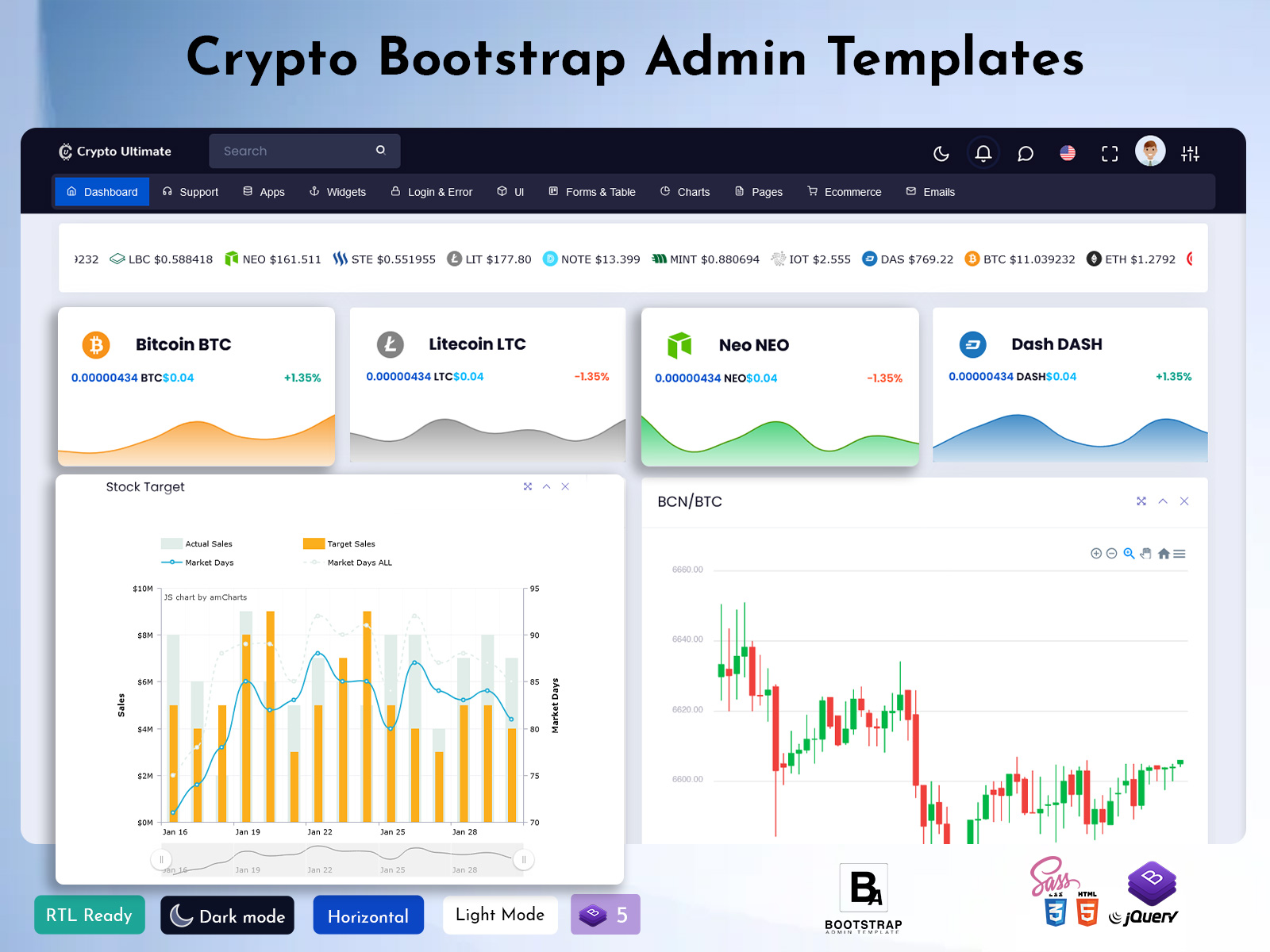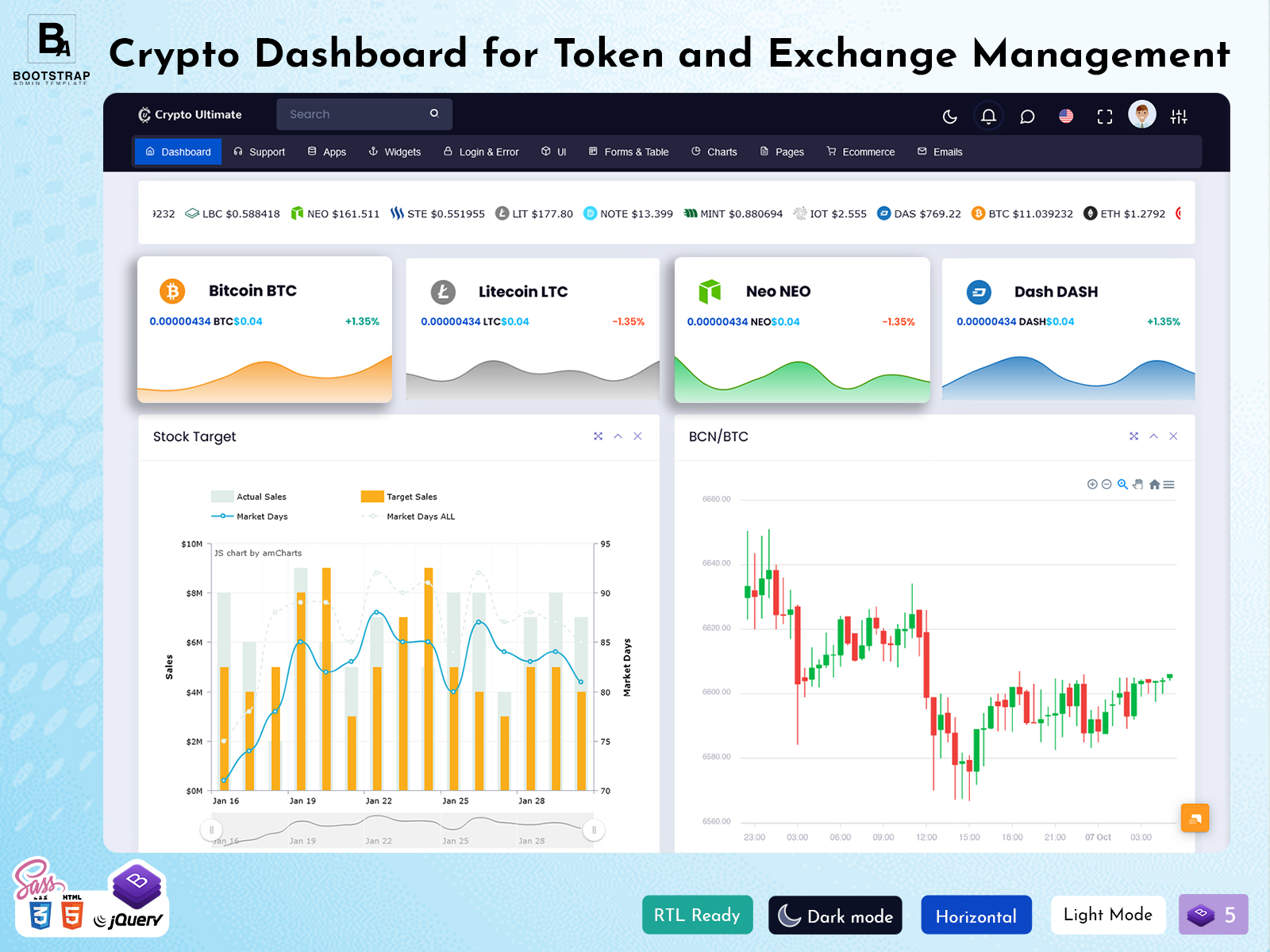
Crypto Dashboard for Token and Exchange Operations
What is a Crypto Dashboard?
A cryptocurrency Dashboard platform can involve many different types of information at the same time. There may be digital assets, user accounts, token records, trading activity, platform settings, transaction histories, and administrative tasks. When these areas are handled through disconnected screens, managing the platform can become difficult as the amount of information increases.
A Crypto Dashboard provides a centralized interface for organizing this information. Rather than treating every record as a separate activity, the dashboard can arrange related information into sections that match the way an exchange, token platform, wallet application, or digital-asset service operates.
The purpose of a crypto dashboard is not simply to put cryptocurrency numbers on a screen. A useful interface should help administrators understand the current condition of the platform, identify activities that need review, and move between summary information and detailed records.
For example, an administrator may need to review a token listing, examine an account-related request, check the status of a platform process, or investigate an unusual transaction record. These activities require different types of information, but they can still be organized within one administrative environment.
A well-designed dashboard can also separate information according to user responsibilities. A platform administrator may need access to system-wide activity, while an operations team may work primarily with transactions and account requests. A compliance-oriented role may require a different set of records and permissions.
This makes the dashboard an important part of the overall user experience of a crypto application. It provides the working layer through which authorized users interact with the platform’s underlying data and functions.
For developers, a Crypto Admin Template can provide the visual and structural foundation for building such an interface. Instead of designing every administrative screen from the beginning, developers can customize an existing layout around the requirements of their cryptocurrency application.
A dashboard becomes more useful when it reflects the actual workflow of the platform. The goal is not to display every available data point, but to arrange relevant information so that users can understand what is happening, identify what needs attention, and continue their work without unnecessary navigation.

BUY NOW DEMO
How a Crypto Dashboard Supports Tokenized Platform Operations
Tokenized platforms have their own administrative requirements because a digital asset may move through several stages before it becomes part of a live platform. An organization may need to manage token information, listings, users, transactions, permissions, and operational records from different parts of the system.
A crypto Dashboard can provide a common workspace for these activities. Instead of viewing token information separately from platform activity, administrators can organize related records around the lifecycle of an asset.
This is particularly relevant for a Tokenized Exchange platform. The interface may need to support different administrative stages, such as reviewing asset information, managing listings, monitoring user activity, and maintaining platform records. The exact workflow depends on the application’s business model and technical implementation.
A crypto dashboard can also help teams distinguish between information that requires action and information that is simply being monitored. For example, a completed transaction may only need to remain available for reference, while an unresolved account request may require a staff member to investigate it.
This distinction can make an administrative interface easier to use. Instead of treating every record with the same importance, the dashboard can guide users toward items that require attention.
Another important area is organization. As a crypto platform grows, administrators may deal with thousands of records. Search, filtering, categorization, and structured navigation become increasingly important because users need to find specific information without manually scanning large datasets.
This is where a well-planned dashboard structure can make a practical difference. The interface should help users move from a broad overview to the exact record or section they need to review.

BUY NOW DEMO
Features of Crypto Dashboard
The most useful crypto dashboard features are those that support the platform’s actual administrative workflow. Instead of repeating standard chart and price displays, developers can design the interface around asset management, operational review, account administration, and platform organization.
1. Token Management Workspace
A token management section can provide administrators with a dedicated place to organize asset-related information. Details such as token status, category, listing state, and other application-specific fields can be arranged in a structured format.
2. Asset Lifecycle Tracking
A token may pass through several internal stages before and after being listed. A dashboard can represent these stages clearly so administrators can understand where an asset currently stands and whether any internal action remains pending.
3. Exchange Administration
A Tokenized Exchange platform may require administrative screens for managing listed assets, user activity, trading-related records, and platform settings. A dashboard can bring these functions into an organized backend workspace.
4. User Account Management
Crypto applications may have different categories of users and different account-related activities. An administrative interface can provide organized user records, account statuses, profile information, and permission controls according to the application’s requirements.
5. Transaction Investigation
Transaction records can become difficult to manage when the platform handles substantial activity. Searchable records and detailed transaction views can help authorized staff investigate individual activities without losing the surrounding context.
6. Status-Based Organization
Using statuses can make administrative information easier to follow. Records can be grouped according to conditions such as pending, active, completed, suspended, or requiring review, depending on the workflow implemented by the application.
7. Permission Management
A crypto platform may have multiple administrative roles. Permission-based access can help ensure that users see and manage only the sections appropriate to their responsibilities. This also allows the dashboard to support different operational teams.
8. Activity History
A platform can benefit from maintaining a clear history of important administrative activities. An activity area can help authorized users understand what changes occurred and provide a useful reference when reviewing previous actions.
9. Search and Filtering
When a platform contains a large number of users, tokens, or transactions, search and filtering become essential. Administrators can narrow information by selected criteria instead of browsing through an entire dataset manually.
10. Custom Administrative Views
Different crypto applications have different workflows. A Crypto Admin Template can be adapted to create custom views for exchanges, tokenized applications, portfolio services, wallet platforms, or other digital-asset products.
Making a Crypto Dashboard Useful for Different Platform Roles
A crypto application rarely has only one type of administrative user. As the platform develops, different employees or teams may need access to different information. Designing one identical dashboard for everyone can create unnecessary complexity.
For example, a platform manager may need a broad view of overall activity, while an operations employee may spend most of the day reviewing account requests or transaction records. A token manager may focus on asset listings and token-related information.
A role-oriented dashboard can make these differences easier to handle. Each user can receive a view that emphasizes the information needed for their responsibilities while limiting unnecessary sections.
This approach also helps reduce visual overload. Cryptocurrency applications can contain a large amount of information, and displaying everything at once can make an interface harder to understand. A focused dashboard gives users a clearer starting point.
Another useful approach is allowing users to investigate information progressively. A summary section can provide the starting point, while detailed pages can contain the complete record. This prevents the main dashboard from becoming crowded with every available field.
The same principle can be applied to token administration. A token overview may show its current administrative status, while a separate detail page can contain additional information, associated records, and internal actions.
For developers, this creates a more flexible application structure. Instead of designing a single screen that attempts to serve every purpose, the dashboard can act as the central navigation layer connecting specialized administrative areas.
Crypto Tokenize Admin Template for Exchange-Oriented Applications
A crypto tokenize admin template can be useful when a project needs an administrative interface for token-focused operations. Tokenization applications may require specialized screens for assets, listings, users, transactions, and other platform-specific processes.
The interface can be designed around the lifecycle of the digital assets rather than relying only on market-monitoring screens. This can make the backend more appropriate for projects where token administration is a major part of the application.
Similarly, tokenize crypto currency admin templates can provide a starting structure for projects that combine cryptocurrency functionality with administrative workflows. Developers can customize the available interface according to the application’s database structure, permissions, business rules, and operational requirements.
A Crypto Admin Template can also be adapted for applications beyond exchanges. Depending on the project, it may serve as a frontend foundation for digital-asset management platforms, token applications, investment interfaces, or internal cryptocurrency administration systems.
The important point is that a template provides the interface foundation, not the complete cryptocurrency infrastructure. Developers still need to implement the application’s backend, blockchain connections where required, authentication, transaction processing, security controls, validation, and business-specific logic.
Benefits of Crypto Dashboard
1. Centralized Platform Management
A crypto dashboard brings different administrative activities into one structured workspace. This can reduce the need to switch between unrelated systems and give authorized teams a clearer starting point for managing platform operations.
2. Easier Token Administration
Token-related records can become complicated when assets move through different stages. A structured dashboard can organize these stages and provide administrators with a clearer way to review asset information and outstanding tasks.
3. Better Workflow Visibility
Status-based views can show which activities are completed, pending, active, or require attention. This helps teams understand the current state of platform processes without manually checking every individual record.
4. More Efficient Record Investigation
Searchable and organized records make it easier to locate specific users, transactions, assets, or administrative activities. This can reduce unnecessary browsing and help authorized staff investigate individual records more efficiently.
5. Role-Focused Workspaces
Different teams can work with different dashboard views according to their responsibilities. This can reduce unnecessary information on the screen and make the interface more relevant for each administrative role.
6. Flexible Application Development
A Crypto Admin Template gives developers a reusable interface foundation. Instead of building common administrative structures from scratch, developers can customize existing layouts and spend more development effort on application-specific functionality.
7. Scalable Information Organization
As a cryptocurrency platform grows, the volume of records can increase significantly. A well-structured dashboard can use categories, filters, permissions, and separate workspaces to keep administrative information manageable as the application expands.
Bootstrap Admin Template for Crypto Dashboard Development
Bootstrap Admin Template offers crypto-focused dashboard templates intended as frontend foundations for developers creating cryptocurrency and token-related applications. Its current Crypto Bootstrap Admin Template includes multiple dashboard layouts and sections covering areas such as transactions, market-related information, ICO workflows, currency exchange, member management, invoices, tickers, tables, and other administrative interface components.
The template is built with Bootstrap and provides customizable HTML, CSS, and JavaScript resources, making it possible for developers to adapt the interface to their own application structure. For projects involving a Tokenized Exchange platform or token administration, developers can customize the frontend around their own asset workflows, permissions, backend services, and business requirements.
The service is therefore useful for teams that need a prepared administrative UI foundation rather than a completely blank starting point. The template itself does not replace blockchain infrastructure, exchange engines, wallets, authentication systems, or application-specific security logic; those components must be implemented according to the project’s technical requirements.
Conclusion
A crypto dashboard can play an important role in keeping a cryptocurrency platform organized as the number of assets, users, transactions, and administrative activities increases. Its value comes from connecting information with the workflows that platform teams actually follow.
For token-focused applications, a crypto tokenize admin template can provide a useful starting point for organizing asset administration, listings, users, and platform records. Tokenize crypto currency admin templates can similarly be adapted for applications where digital assets are a central part of the platform.
A Tokenized Exchange platform may require several administrative areas, and a structured dashboard can provide a common interface for moving between them. A Crypto Admin Template can simplify the frontend development process while allowing developers to build the application’s own backend and business logic.
The strongest dashboard approach is not about putting every cryptocurrency metric on one screen. It is about creating a clear administrative environment where users can find information, understand its status, investigate records, and complete the tasks connected with their role.
BUY NOW DEMO
FAQ
1. What is a Crypto Dashboard used for?
A Bootstrap Admin Template Crypto Dashboard is used to organize information and administrative activities within a cryptocurrency application. Depending on the project, it can provide access to asset records, user accounts, transactions, platform workflows, token information, and other areas that authorized administrators need to manage.
2. What is a crypto tokenized admin template?
A Bootstrap Admin Template crypto tokenize admin template is a frontend interface foundation designed for applications involving cryptocurrency or tokenized assets. Developers can use its layouts and components as a starting point and customize the screens according to their own token management, user, transaction, and administrative workflows.
3. Can a Crypto Admin Template be used for a Tokenized Exchange platform?
Yes, a Bootstrap Admin Template Crypto Admin Template can be adapted as the frontend foundation for a Tokenized Exchange platform. However, the template itself does not provide the complete exchange infrastructure. Developers still need to implement exchange functionality, backend services, asset processing, authentication, security, and other project-specific requirements.
4. What are tokenize crypto currency admin templates useful for?
Tokenize crypto currency admin templates can be useful for developers building interfaces around digital assets and token-based applications. They can provide prepared structures for administration, records, user management, asset-related sections, and other interface requirements that can later be connected with custom backend functionality.
5. Can a crypto dashboard support different administrator roles?
Yes. A Bootstrap Admin Template dashboard can be designed with role-based access so different administrators receive different views and permissions. For example, an operations user may manage platform records, while another authorized user may handle token information or account-related activities.
6. Does a Crypto Admin Template include blockchain functionality?
A Bootstrap Admin Template should not be treated as a complete blockchain system. Blockchain connectivity, wallet operations, smart-contract interactions, transaction processing, authentication, security, and other technical functionality need to be developed or integrated separately according to the application’s architecture.
7. How can developers customize a crypto dashboard template?
Developers can customize the dashboard’s layouts, navigation, forms, tables, pages, branding, statuses, and other interface elements. They can then connect these screens to their own APIs, databases, blockchain services, authentication systems, and business logic to create an application suited to their specific cryptocurrency project.